Karcher Pressure Washer K1700, CETA Certified, 3 Spray Nozzles, Detergent Tank, 1.2 max. GPM Review (2026)
Updated September 14, 2026 · Research-based review
Our verdict
The K1700 suits an owner who wants a certified, no-surprises electric washer for regular car and driveway cleaning with the reassurance of independent CETA testing behind its pressure claims. Its 1.2 max GPM flow is on the slower side for rinsing large vehicles quickly, and the nozzle count is limited compared with some rivals.
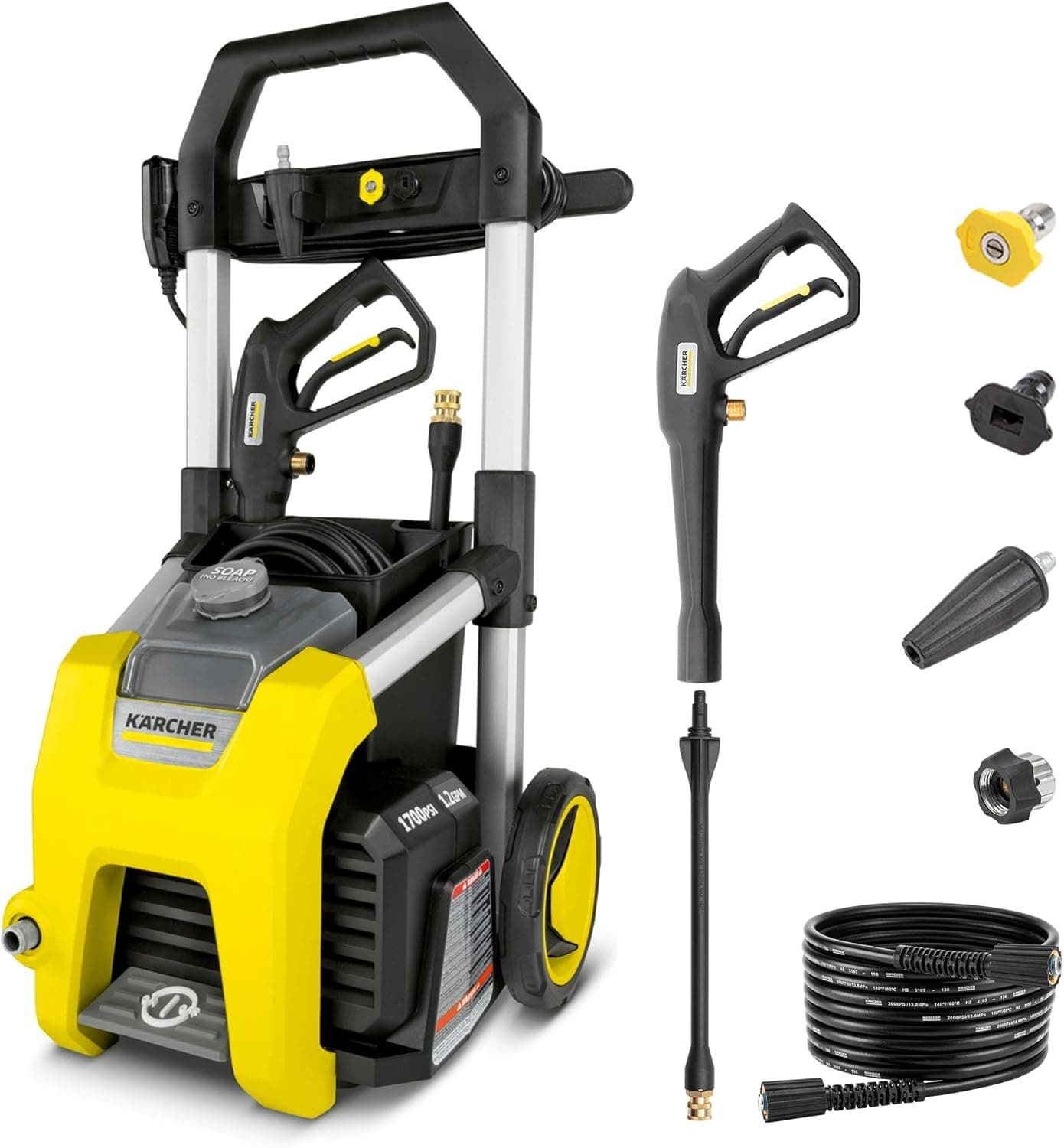
Karcher K1700 pressure washer, CETA certified, with 3 spray nozzles, a detergent tank and 1.2 max. GPM output.
Price range: $ (Budget)
What we liked
- + CETA certification means the performance ratings were verified
- + Detergent tank applies soap without a separate foam cannon
- + Compact Karcher unit is easy to store in a small garage
Trade-offs
- - 1.2 max. GPM rinses slower than washers with higher flow
- - Only 3 spray nozzles, so fewer spray options for different tasks
Who this pressure washer fits
The Karcher K1700 is built for a homeowner who wants a dependable electric pressure washer for routine car washing, driveway and siding cleanup without researching pump technology or independent lab reports themselves. Karcher backs the K1700's ratings with CETA, the Cleaning Equipment Trade Association, certification, meaning the pressure and flow figures printed on the box have been independently verified rather than self-reported, which matters to buyers who have been burned by inflated PSI claims on other electric washers. It suits anyone who wants an integrated detergent tank for soap application without buying a separate foam cannon.
Specs and design in plain English
Karcher rates the K1700 at 1700 PSI TruPressure with a 1.2 max GPM flow rate, and both figures carry the CETA certification mentioned above. The washer includes a 20 foot high pressure hose, an integrated roughly 0.5 gallon detergent tank built into the housing, and oversized never-flat wheels for rolling across a driveway or lawn. Three quick-connect nozzles ship with the unit: a 15 degree tip, a turbo nozzle, and a 65 degree soap nozzle for applying detergent, giving a narrower spread than rivals that include four or five nozzles but still covering rinse, spot cleaning, and soap application.
Living with it: setup, use and care
Setup is connect the hose and detergent tank, choose a nozzle, and use the on and off foot switch to start the unit, a detail Karcher highlights as easier on the back than reaching down to a low power button. The pump automatically stops when the trigger is released and restarts when squeezed again, which saves wear on the motor and avoids running water needlessly between spray bursts. Washing a car typically starts with the soap nozzle and detergent tank to apply cleaner, a dwell period, then a rinse with the 15 degree tip, saving the turbo nozzle for wheels and concrete rather than painted panels given how concentrated that spray pattern is.
Trade-offs and how it compares
Against the Sun Joe SPX3001 and SPX2680-MAX in the same guide, both of which scored higher here, the K1700's main disadvantage is flow rate, since 1.2 max GPM rinses more slowly than the 1.76 GPM those Sun Joe units and the Westinghouse ePX3050 deliver, meaning more time spent rinsing suds off a full-size vehicle. The K1700 also ships with three nozzles compared with the three to five nozzle sets on competing Westinghouse models, so there is less variety for specialized tasks out of the box. What the K1700 offers in return is that CETA-verified rating, which is a real point of trust that not every electric washer in this guide can claim.
Verdict and who should pick something else
For an owner who values verified performance claims and wants a straightforward washer for regular vehicle and driveway cleaning, the K1700 is a solid, trustworthy pick, in line with our score of 7.8 out of 10. It suits anyone who washes a car every week or two and does not need to rush through the rinse step. Someone who washes multiple vehicles back to back, or who wants a wider spray nozzle selection and faster rinse flow, should lean toward the Sun Joe SPX3001 or a higher-GPM Westinghouse model instead, since the K1700 trades some speed for its certified, dependable rating.
Frequently asked questions
What does CETA certified mean for the Karcher K1700?
CETA, the Cleaning Equipment Trade Association, independently tests and verifies the pressure and flow ratings, so the K1700's 1700 PSI and 1.2 max GPM figures are not just self-reported by Karcher.
How many nozzles come with the Karcher K1700?
It ships with three quick-connect nozzles: a 15 degree rinse tip, a turbo nozzle, and a 65 degree soap nozzle for the detergent tank.
Does the K1700 have a soap or detergent tank?
Yes, it has an integrated detergent tank built into the housing, roughly 0.5 gallon in capacity, so soap can be applied without a separate foam cannon attachment.
How is the K1700 turned on and off?
It uses an on and off foot switch rather than a hand-operated power button, and the pump automatically stops when the spray trigger is released.
Prices change often, so check the current price and availability on Amazon.
Check price on AmazonCar Detail Picks may earn a commission from the link above.