Adam's Polishes One Step Polish 12 oz, Cut & Finishing, Body Shop Safe Review (2026)
Updated September 14, 2026 · Research-based review
Our verdict
A single-step machine polish that combines cutting and finishing abrasives to correct mild to moderate scratches and swirls while adding gloss in one pass. It suits cars in decent condition that need a refresh rather than a full correction, since heavy oxidation or deep scratches still call for a dedicated cutting compound first.
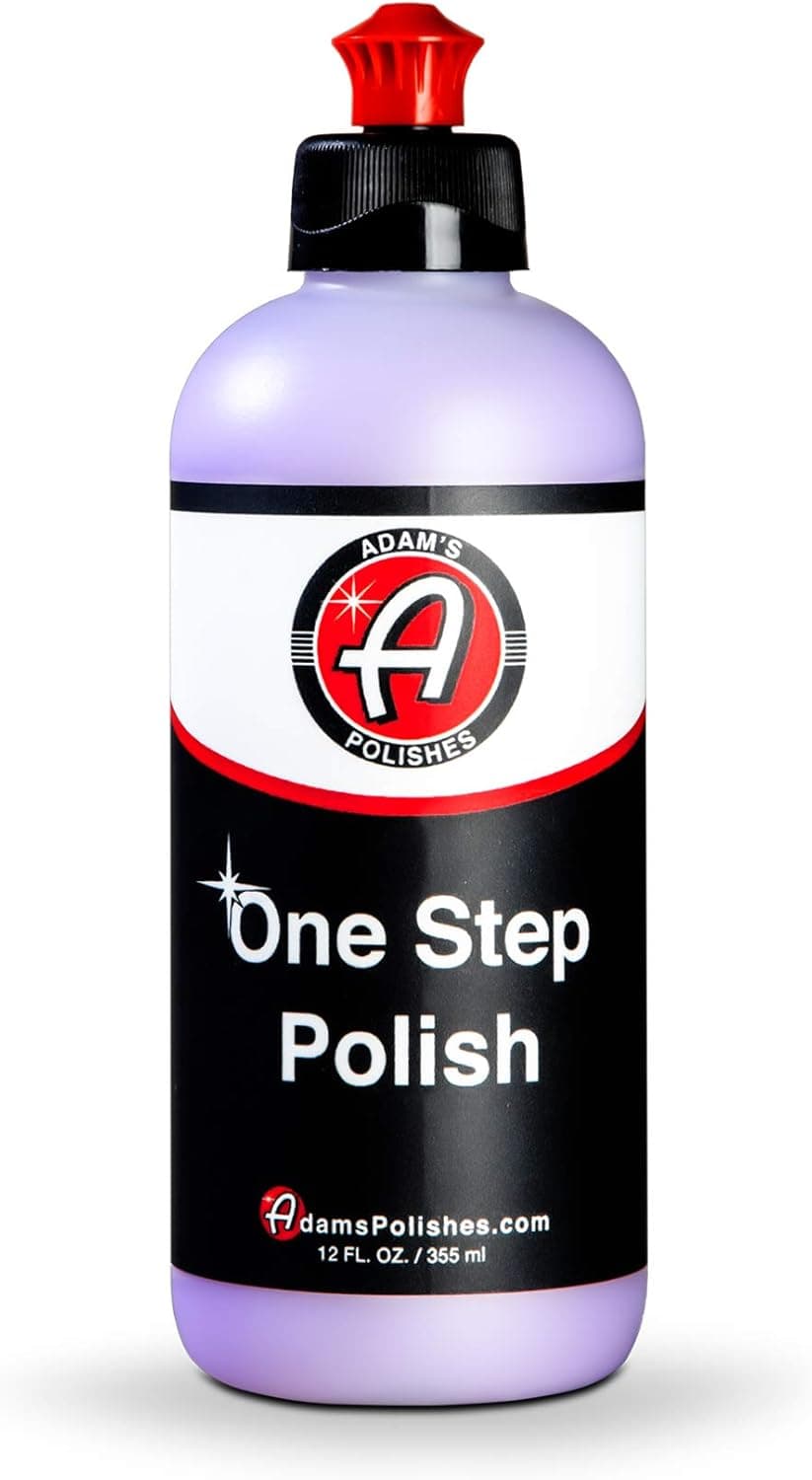
Adam's One Step Polish in 12 oz, a body shop safe cut and finishing polish for single-step paint enhancement.
Price range: $ (Budget)
What we liked
- + One step cut and finish saves time on cars in decent condition
- + Body shop safe formula has no fillers that hide defects
- + 12 oz bottle suits hobbyists polishing a car or two
Trade-offs
- - Will not match a dedicated finishing polish for ultimate gloss
- - Heavy defects still require a separate compound first
Who a one-step polish fits
One Step Polish is aimed at owners and detailers who want to save time on a car that is not badly neglected, using diminishing abrasive technology that starts cutting like a compound and breaks down into a finer polish as you work it. That makes it a good match for seasonal maintenance details, pre-sale cleanups, or hobbyists who do not want to run two separate products for cutting and finishing on every panel. It is body shop safe and rated for clear coat, single stage, and lacquer paints, extending its use to older vehicles and repainted panels. Cars with heavy oxidation or deep scratches still need a dedicated heavy cut compound first, since a one-step product is a compromise, not a replacement for real correction.
What is in the bottle
Adam's states the 12 ounce formula uses a blend of polishing agents and abrasives described as diminishing abrasive technology, meaning the abrasive particles break down as you buff, shifting from a cutting action to a fine finishing polish within the same working cycle. It is formulated to remove sanding scratches up to 2000 grit along with swirls and light to moderate paint defects, and Adam's markets it as a low dust formula with a long open time, giving more working time on the panel before the product flashes and becomes hard to work. It is designed to pair with Adam's own One Step Pad, though it can be used with other polishing pads.
Applying it by machine or by hand
For machine application, Adam's directions call for working on a cool, shaded panel, applying around four drops to a white foam pad for light correction, spreading the product over a roughly 2 foot by 2 foot section, and running the polisher at speed 3 to 4 with light pressure and about 25 percent overlap between passes. For medium correction, an orange or blue pad at speed 4 to 5 with one to two drops per section is the recommended approach. Work each section until the product turns clear, then wipe the residue away with a microfiber towel. Hand application uses a hex grip applicator with light, even pressure, finished the same way with a microfiber towel.
What it will and will not fix
Because it is a compromise product, One Step Polish will not match a dedicated finishing polish for absolute clarity and depth, and cars with heavy defects still need a separate cutting compound before this product can finish the job. Compared with Menzerna Super Finish 3500, a pure finishing polish built purely for maximum gloss with no meaningful cutting ability, this Adam's product trades some ultimate shine for the convenience of handling both cutting and finishing in one pass. Against Meguiar's Professional Ultra Pro Finishing Polish, another dedicated finishing-only product, the same trade-off applies: One Step Polish is the more flexible, faster option for cars that do not need a two-step correction.
Verdict and who should pick something else
For a car in reasonably good shape that just needs its shine refreshed, One Step Polish is a sensible time-saver that covers light correction and finishing without a second product, and the low dust formula makes the job more pleasant on a driveway or in an enclosed garage. Anyone facing heavy oxidation, deep scratches, or aiming for competition-level clarity should start with a dedicated heavy cut compound and follow it with a pure finishing polish, since asking a single one-step product to do both jobs at their best will leave some gloss on the table compared with a proper two-step process built around separate cutting and finishing stages.
Frequently asked questions
What size scratches will this polish remove?
Adam's states it removes sanding scratches up to 2000 grit along with typical swirls and light to moderate paint defects in a single machine pass.
Can I use it by hand?
Yes. Adam's directions cover hand application using a hex grip applicator with light, even pressure, though a dual action polisher will generally give a more consistent result.
Is it safe on single stage or lacquer paint?
Adam's lists the formula as safe for clear coat, single stage, and lacquer paints, and describes it as body shop safe.
Do I still need a separate compound for heavy scratches?
Yes. For heavy oxidation or deep scratches beyond 2000 grit, a dedicated cutting compound should be used first, with this polish reserved for the finishing stage.
Prices change often, so check the current price and availability on Amazon.
Check price on AmazonCar Detail Picks may earn a commission from the link above.