Paint Thickness Gauge CM-206X, 0-1500µm, Fe/NFe/Zn Auto Detection, Ruby Probe Review (2026)
Updated September 21, 2026 · Research-based review
Our verdict
The CM-206X measures paint thickness from 0 to 1500 microns and automatically tells steel, aluminum and galvanized panels apart, which is the feature that separates it from budget gauges. It suits buyers checking a used car for hidden bodywork or repaints, not casual owners who need it once.
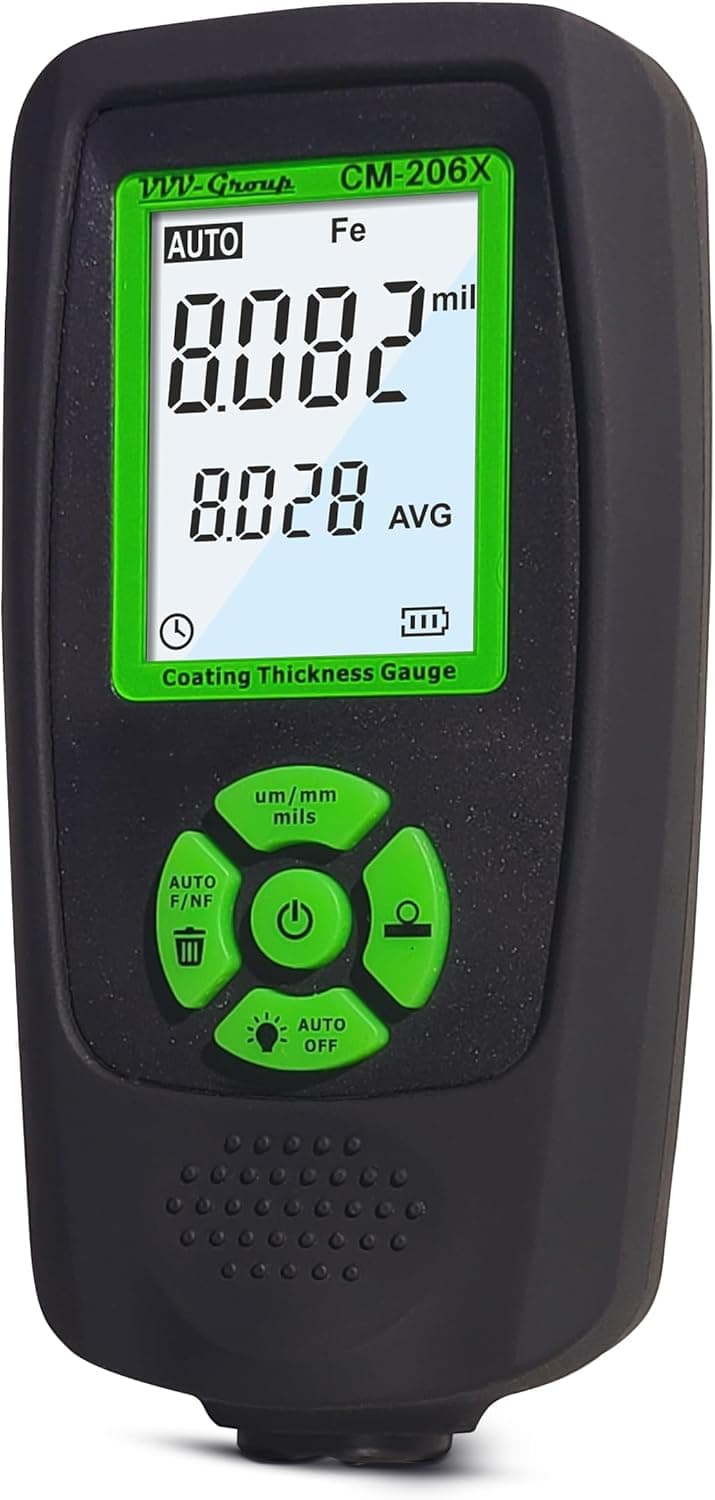
Paint Thickness Gauge CM-206X with a 0-1500µm range, Fe/NFe/Zn auto detection and a ruby probe for precise readings.
Price range: $$$ (Premium)
What we liked
- + Ruby probe resists wear, keeping readings consistent over time
- + 0-1500µm range covers factory paint and heavy respray areas
- + Fe/NFe/Zn auto detection works across steel, aluminum and zinc
Trade-offs
- - Higher cost than basic gauges aimed at one-time used car checks
- - Advanced settings take time to learn for casual buyers
What it measures
The CM-206X is a digital coating thickness gauge built to check how much paint and filler sits on a car's body panels, with a measurement range of 0 to 1500 microns, equal to about 0 to 59.1 mils. Resolution is rated down to 0.001 mils, which is fine enough to catch a panel that has been resprayed or skim-coated with filler even when the difference from a factory panel is small. That range comfortably covers the factory paint thickness on nearly every production car as well as most heavier respray or bodywork situations, though it can struggle with unusually thick industrial coatings well outside normal automotive use.
Auto detection across metals
A key feature of this gauge is automatic Fe, NFe and Zn detection, meaning it recognizes steel, non-ferrous metals like aluminum, and galvanized panels without the user manually switching modes between panels. That matters on modern vehicles, which increasingly mix steel and aluminum body panels on the same car, since a gauge that only reads steel accurately will give misleading or no readings on an aluminum hood or fender. Galvanized detection adds a further layer of information for identifying replacement panels, since factory galvanized steel and some aftermarket panels are not always coated identically, and a reading that suddenly stops registering the Zn symbol on one fender compared with the rest of the car can be a useful flag on its own.
Build and probe
The gauge uses a ruby-tipped probe, chosen because ruby resists the wear that a plain metal tip would pick up from repeated contact with painted surfaces over thousands of readings. The display is an illuminated LCD, which helps with readability in dim garages, shaded lots, or covered parking areas where a plain screen can be hard to read against ambient light. It is also rated to operate across a wide temperature range, from well below freezing up to around 131 degrees Fahrenheit, so seasonal outdoor use should not affect reading accuracy. A carrying pouch is generally included, and using it is worth the habit given some owners report screen damage after drops onto concrete.
How readings are presented
Beyond a single number, the CM-206X tracks a running set of statistics as a user moves around a car, including the mean, minimum, and maximum readings and the total count taken, which helps build a fuller picture of a panel's history rather than relying on one spot check. A single high reading on a fender, for example, is more meaningful when compared against a run of consistent readings on the doors and roof, since factory paint thickness is fairly uniform across a car unless it has been repaired. This statistical view is part of why the gauge is popular with buyers doing pre-purchase inspections.
Who should buy it
This gauge fits buyers who regularly check used cars for hidden accident repair, DIY detailers curious about how much clear coat remains before a correction, and anyone comparing several vehicles where panel-by-panel consistency matters. It is more capability than a casual buyer needs for a single one-time check before buying one car, where a simpler, cheaper gauge would answer the same basic question just as well. For repeat use across many vehicles, the combination of a durable ruby probe, wide metal detection and stored statistics makes the higher price easier to justify, and the running statistics feature in particular saves time compared with writing down each reading by hand during a walk-around inspection.
Frequently asked questions
What is the measurement range?
It measures from 0 to 1500 microns, roughly 0 to 59.1 mils, with resolution down to 0.001 mils.
Does it work on aluminum panels?
Yes, it automatically detects steel, non-ferrous metals such as aluminum, and galvanized surfaces without manual mode switching.
Why does the probe matter?
It uses a ruby-tipped probe, which resists wear from repeated contact with painted surfaces better than an uncoated metal tip.
Can it be used outdoors in cold weather?
Yes, it is rated to operate across a wide temperature range from well below freezing up to about 131 degrees Fahrenheit.
Prices change often, so check the current price and availability on Amazon.
Check price on AmazonCar Detail Picks may earn a commission from the link above.