3D ACA 510 Rubbing Compound, Fast-Cutting Paint Correction Review (2026)
Updated September 14, 2026 · Research-based review
Our verdict
A fast cutting rubbing compound for owners tackling heavier swirls, oxidation, and sanding marks with a rotary or dual action polisher. The alpha ceramic alumina abrasive that cuts quickly while finishing relatively clean is the main strength, and the need for a follow up polish to fully remove haze is the main trade off.
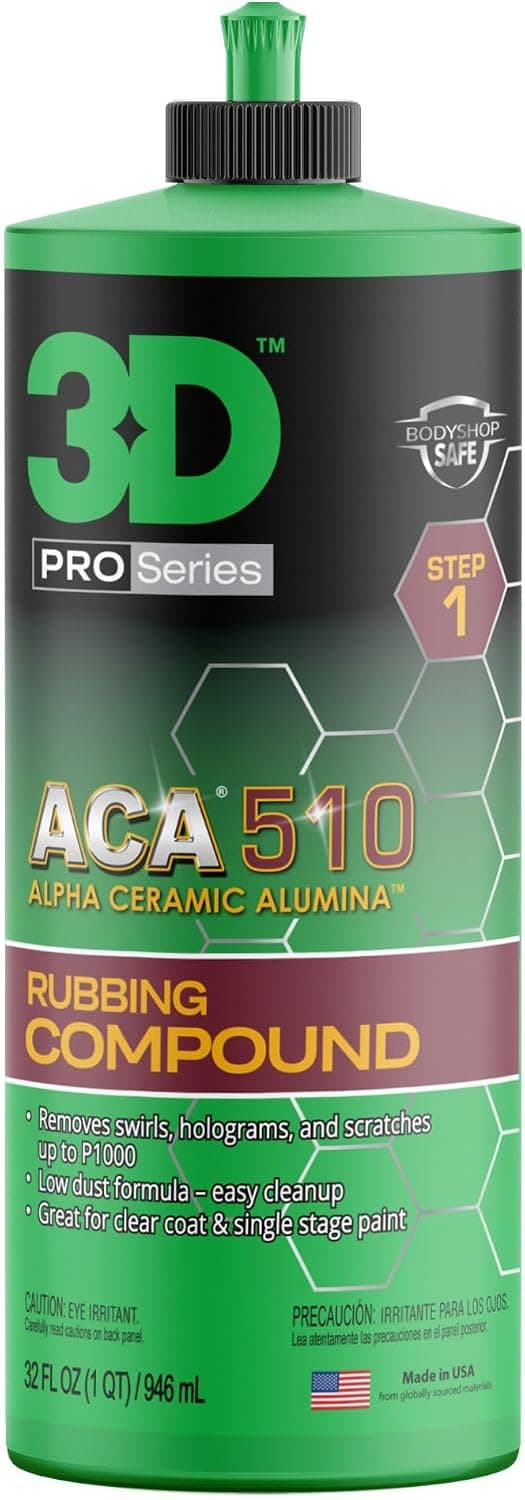
3D ACA 510 Rubbing Compound, a fast-cutting paint correction compound for removing heavy swirls and sanding marks.
Price range: $ (Budget)
What we liked
- + Fast-cutting abrasives remove defects in fewer passes
- + Popular body shop compound that finishes cleaner than older rubbing compounds
- + Pairs well with a 3D finishing polish for a full system
Trade-offs
- - Check the bottle size against how many panels you plan to correct
- - Aggressive cut needs a follow-up polish to remove haze
Who this rubbing compound is for
This is built for owners and detailers doing real paint correction work, removing heavier swirl marks, oxidation, or sanding marks left behind after wet sanding a panel, rather than light touch up on a single scratch. It is meant to be used with a rotary or dual action polisher and a wool or foam cutting pad, not applied by hand, so it fits someone who already owns or is investing in a machine polisher. According to the manufacturer it is body shop safe and low dust, which also makes it a reasonable choice for anyone working indoors or on multiple panels in one session. It is not the right product for someone who only needs to remove one small blemish, where a milder hand safe product would be simpler and lower risk.
What the alpha ceramic alumina abrasive does
According to 3D's own product information, this compound is engineered with a proprietary abrasive called Alpha Ceramic Alumina, designed to cut fast while generating less heat than older style compounds, which the maker states helps it polish more consistently and leave less haze behind. The official listing describes it as capable of removing P1500 and finer sanding marks, meaning it is meant for correcting marks left by fairly fine grit sandpaper rather than acting as a heavy leveling compound for coarse sanding scratches. It is silicone free and water based, which the manufacturer notes makes it easier to wipe away cleanly compared with older solvent heavy compounds, and it is formulated without OSHA regulated crystalline silica, a safety consideration for anyone using it regularly in an enclosed shop.
Working with it on a polisher
The compound is applied to a wool or foam cutting pad on a rotary or dual action polisher and worked across a section of panel, with the manufacturer describing it as cutting cool and fast with low dusting compared with more aggressive compounds. Because it is water based, buffing residue away is generally straightforward with a clean microfiber towel rather than requiring extra solvent or panel wipe steps. Even with a compound described as finishing relatively clean, 3D and most compound makers recommend following heavier cutting steps with a finer polish to fully remove any remaining micro marring or haze the compound itself may leave, so this is typically step one of a two step correction process rather than a standalone final step.
Comparing it with other cutting compounds
Its own guide places this compound fourth of eight cutting compounds, behind Meguiar's DA Microfiber Correction Compound D300, 3D's own One Car hybrid rubbing compound and polish, and a Chemical Guys correction and polish kit, and ahead of 3D's more aggressive ACA 500 step 1 compound and SONAX CutMax. That it sits behind its own sibling product, the milder ACA 500, in a heavier cutting comparison suggests this 510 formula is positioned as a middle ground rather than the most aggressive option in 3D's own lineup. Compared with rival brands, the main differentiator buyers report is how clean the compound wipes off and how little haze it leaves before a finishing polish, rather than raw cutting speed alone.
Verdict and who should choose differently
Reach for this if you are doing machine paint correction on heavier swirls, oxidation, or fine sanding marks and want a body shop grade compound that cuts quickly without excessive dusting, understanding it works best as the first of two correction steps rather than a one and done polish. It rewards owners who already have a polisher and cutting pad on hand. Look elsewhere if you only need to remove a single light scratch by hand, where a gentler hand safe scratch remover is simpler and lower risk, or if you specifically want the fastest cutting compound in 3D's own range, since the brand's own ACA 500 step 1 compound is positioned as the more aggressive option for the deepest defects.
Frequently asked questions
Do I need a polisher to use this compound, or can I apply it by hand?
It is meant to be used with a rotary or dual action polisher and a wool or foam cutting pad rather than applied by hand, since it is formulated for machine correction work.
Will this compound leave the paint looking hazy?
Like most cutting compounds it can leave some haze or fine marring behind, so the manufacturer and most detailers recommend following it with a finer finishing polish to fully clear the finish.
What size bottle does this compound come in?
Amazon listings for this product show it sold in a 32 oz bottle, though the bottle size is not stated in the product title itself.
Is this compound safe to use in an enclosed garage?
The manufacturer describes it as low dust and free of OSHA regulated crystalline silica, which makes it a reasonable choice for indoor use compared with older, dustier compounds, though normal ventilation and eye protection are still sensible.
Prices change often, so check the current price and availability on Amazon.
Check price on AmazonCar Detail Picks may earn a commission from the link above.