3M 39195 Ultra Headlight Restoration Kit Review (2026)
Updated September 14, 2026 · Research-based review
Our verdict
Best for owners whose headlight lenses are badly yellowed, hazed, or pitted and need a real sanding based fix rather than a quick wipe on treatment. The graduated 3M abrasive discs cut evenly and finish with a wax protectant step, though the process takes more time and costs more than simple wipe on removers meant for mild haze.
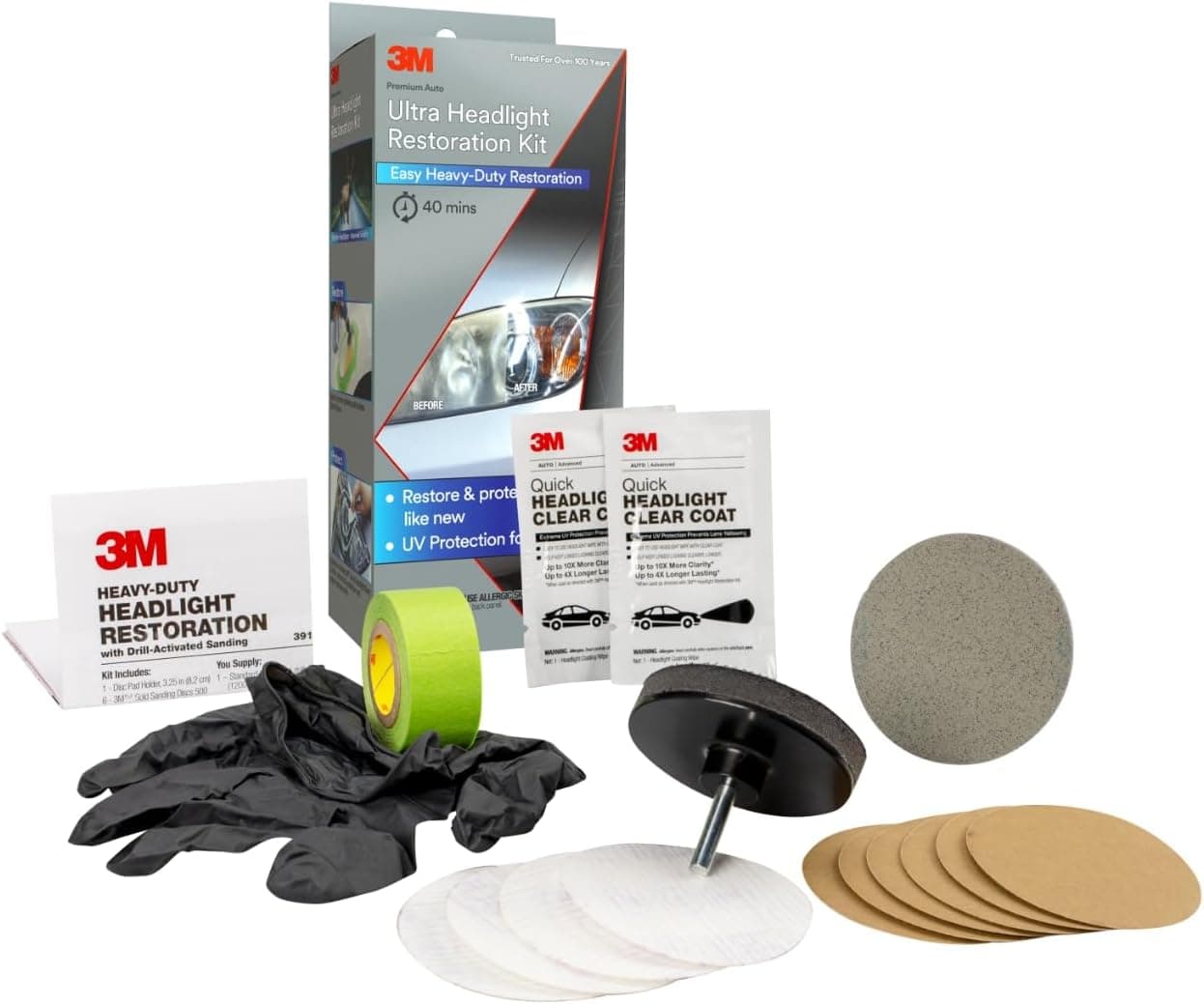
3M 39195 Ultra Headlight Restoration Kit, a thorough kit for badly oxidized lenses that need real sanding and sealing.
Price range: $ (Budget)
What we liked
- + Ultra kit is built for severely yellowed and pitted headlights
- + 3M abrasives cut consistently for a clear, even finish
- + Includes a protective step so results last longer
Trade-offs
- - More steps and time than quick wipe-on products
- - Costs more than basic kits for mildly hazy lenses
Who this headlight kit is for
This kit targets the worst cases of headlight oxidation, the kind where lenses look chalky white or yellow-brown and light output has visibly dropped. It is built around real sanding, not a chemical wipe, so it suits owners who want a thorough correction and are comfortable spending thirty to forty five minutes per lens working through a grit progression. Detail hobbyists, DIYers prepping a car for sale, and anyone who has tried a spray-on clarity product without lasting results are the best fit. Drivers who just want a five minute fix for slight dullness will find this more kit than they need, since the process involves taping off trim, working through multiple discs, and finishing with a protective coat. For genuinely cloudy or pitted plastic lenses, though, this level of correction is usually what actually restores clarity instead of masking it for a few weeks.
What is in the box and how it works
The kit is built around a 3.25 inch disc pad holder and a graduated set of 3M abrasive discs: coarser 500 grit gold discs to remove the oxidized top layer, 800 grit white finishing discs to smooth out the sanding marks, and a fine 3000 grit Trizact refining disc to bring back clarity before the final polish. Masking tape is included to protect the surrounding paint and trim, and a wax protectant is included as the last step to seal the freshly restored plastic. 3M sizes the kit to cover two headlight lenses, so a typical car with two front lenses uses the full kit in one session. The discs can be worked by hand or paired with a household drill for faster, more even cutting, since the graduated grit system is what actually levels out pitting rather than just polishing over it.
Setting it up and living with the results
Plan for a full session rather than a quick five minute job: mask the surrounding paint and trim first, then work through the sanding discs in order, rinsing between steps so grit from the coarser disc does not scratch the finer stage. Because the discs progress from 500 to 800 to 3000 grit, skipping a stage or rushing through wet sanding tends to leave a hazy finish rather than the clear result the kit is capable of. Once the lens is sanded clear, the included wax protectant needs to be applied and buffed off to seal the now-exposed plastic, which is the step that determines how long the clarity actually lasts. Skipping the protectant, or using the car through direct sun and road grime without reapplying protection later, is the most common reason results fade sooner than expected on a restoration like this.
Trade-offs and how it compares
Inside 3M's own lineup, this Ultra kit sits above the older 3M 39008 restoration system, which uses a simpler abrasive pad setup rather than the graduated disc progression here, and reviewers consistently rank it as the stronger performer on heavily oxidized lenses. Wipe-based options like the Rain-X Headlight Restoration Kit or Mothers NuLens trade correction power for speed, since they rely on chemical polish rather than sanding, which makes them faster but weaker on lenses with real pitting or deep yellowing. Ceramic wipe systems such as CERAKOTE aim for a similar no-sanding convenience with a longer-lasting coating claim. The trade-off with this 3M kit is time and cost: it takes real elbow grease and multiple stages, and it is priced above basic single-step removers, but that extra process is what lets it handle lenses other kits cannot fully clear.
Verdict and who should look elsewhere
For headlights that have gone properly cloudy, yellow, or pitted, this kit's sanding-based approach and included protectant step give it a real shot at restoring both looks and light output, which is why it sits near the top of most headlight restoration comparisons. Owners with only light haze, or anyone who wants a five minute wipe-and-done fix, will likely be happier with a chemical-only product since this kit's multi-stage process is overkill for a minor case. Anyone who has already tried a spray coating without lasting results, or is prepping a car where clear headlights matter for resale or inspection, is the better audience for the extra time this kit asks for.
Frequently asked questions
Do I need a drill to use this kit?
The discs can be worked by hand, but 3M's system is designed to pair with a household drill for faster, more even cutting across the sanding stages.
How many headlights does one kit cover?
3M sizes the Ultra kit to restore two headlight lenses, which covers a typical car's front pair in one session.
Will this fix headlights that are pitted, not just yellowed?
The graduated 500 to 3000 grit disc progression is built to level out light pitting as well as surface yellowing, which is why it is positioned above simple wipe-on removers for heavier oxidation.
How long do the results last?
Longevity depends on applying and later reapplying the included wax protectant, since that sealing step is what protects the freshly sanded plastic from UV exposure and road grime.
Prices change often, so check the current price and availability on Amazon.
Check price on AmazonCar Detail Picks may earn a commission from the link above.