How to Remove Water Spots From Car Paint
As an Amazon Associate I earn from qualifying purchases.
Water spots form when droplets dry on your paint and leave behind minerals from the water. Left alone, they can etch into the clear coat and become harder to remove. The good news is most spots come off with the right sequence: a thorough wash, decontamination, and careful mineral removal. This guide covers what causes water spots and how to clear them without damaging your finish.
Understand What Causes Water Spots
Water spots are mineral deposits left when water evaporates on the surface instead of being wiped away. Hard water, sprinklers, and letting a car air dry are the usual culprits, and the marks range from light rings to etched craters.
The best defense is to never let water dry on the paint in the first place. Drying promptly after every wash prevents most spots from forming, so a good drying routine is step one of any long-term fix.
Start With a Thorough Wash
Before treating any spots, wash the car so you are not working over loose dirt. Some light water spots are just surface residue and come off with a proper wash using a quality car soap.
A clean-rinsing soap lifts road film and any water-borne deposits sitting on top of the clear coat. Wash and rinse fully, then assess which spots remain so you know how far to take the next steps.
Clay the Bonded Deposits
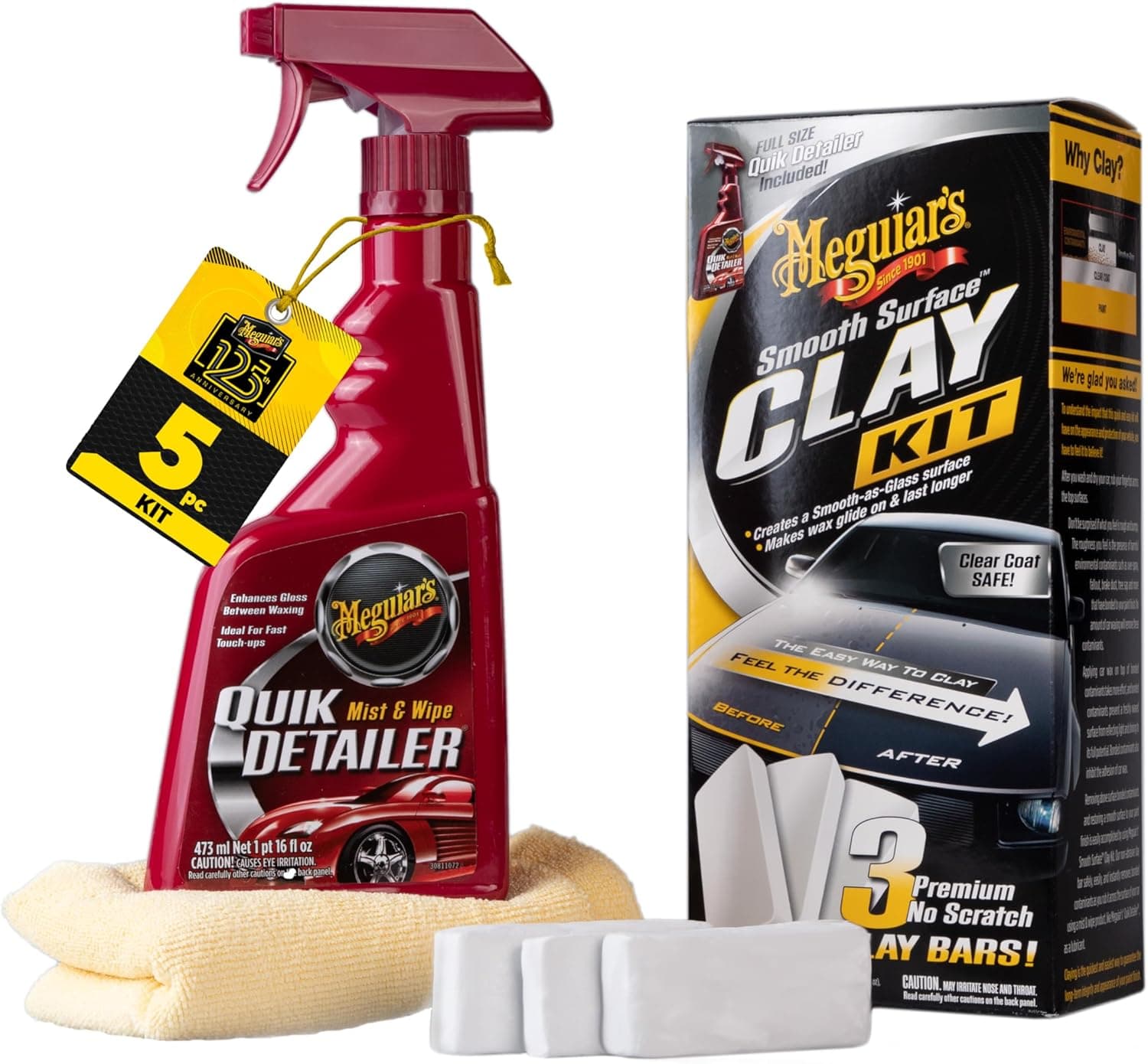
Spots that survive a wash are usually bonded to the surface. A clay bar or clay mitt glides across lubricated paint and pulls those deposits off mechanically, leaving the finish smooth to the touch.
Always use plenty of clay lubricant and light pressure so the clay does not mar the paint. Fold to a fresh face often, and check your progress by running a clean hand over the panel.
Break Down Mineral and Iron Deposits
For stubborn deposits, a dedicated remover can dissolve minerals and embedded iron particles chemically instead of relying on abrasion. Spray it on, let it dwell, and rinse to clear contamination the wash left behind.
These products work well on both paint and glass where hard-water spotting tends to concentrate. Follow the label for dwell time and always rinse thoroughly so nothing is left to sit on the surface.
Prevent Spots Between Washes
Once your paint is clean, keeping it spot-free is about controlling how water dries. A rinseless wash lets you clean lightly soiled panels without a hose, so there is less standing water to evaporate.
Pairing careful drying with a low-water maintenance routine keeps minerals from building up again. Stay ahead of it and you will spend far less time chasing etched spots down the road.