Paint Thickness Gauge CM-224Pro, 0-1500µm, Fe/NFe/Zn Auto Detection, Auto Calibration Review (2026)
Updated September 21, 2026 · Research-based review
Our verdict
The CM-224Pro measures coating thickness from 0 to 1500 micrometers with 0.1 micrometer resolution and auto-identifies steel, aluminum and zinc-coated panels, factory calibrated out of the box. It suits detailers checking paint depth regularly, though the price sits above gauges for a single inspection.
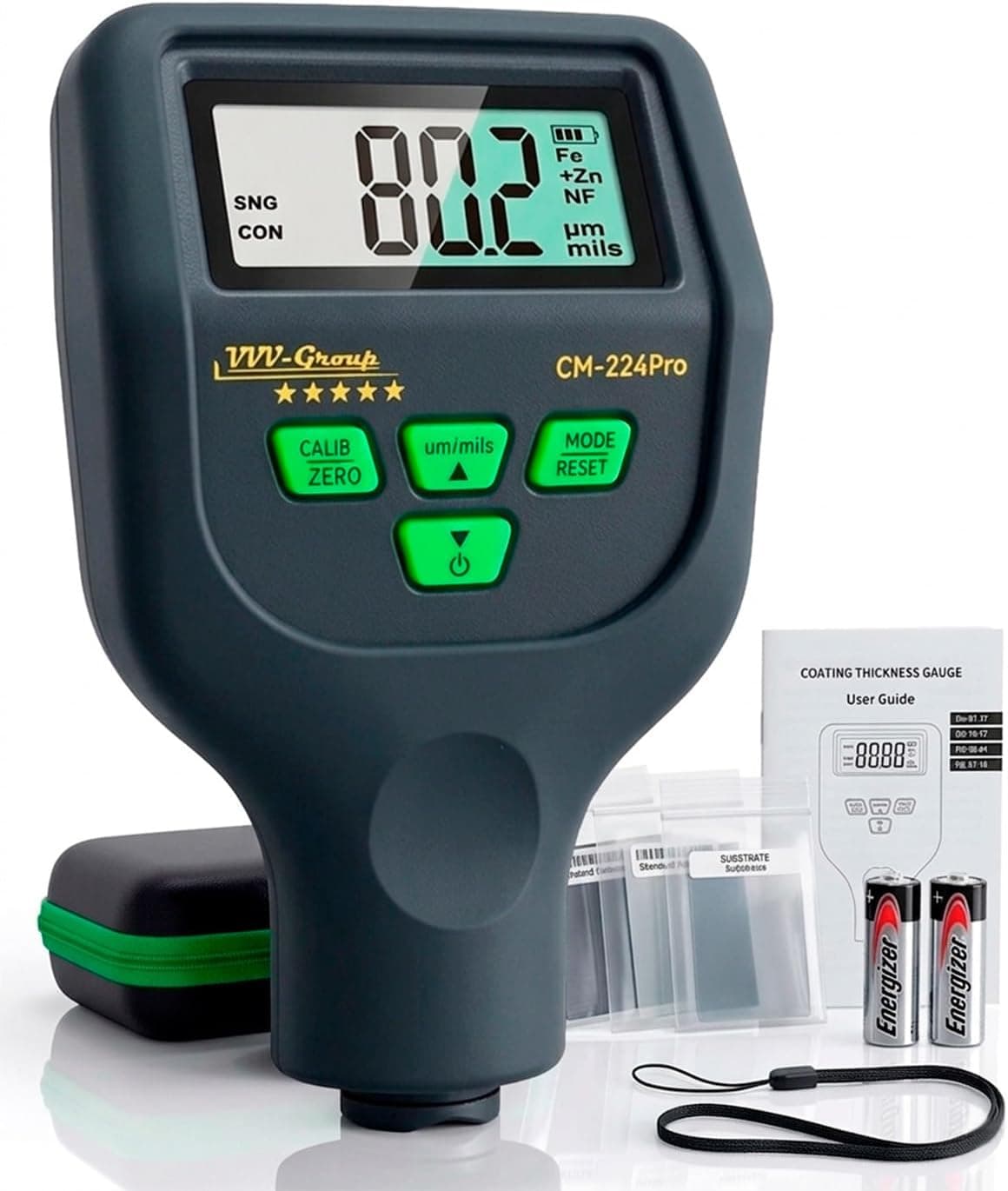
Paint Thickness Gauge CM-224Pro with 0-1500µm range, Fe/NFe/Zn auto detection and auto calibration for detailers.
Price range: $$$ (Premium)
What we liked
- + Auto calibration reduces setup time between inspections
- + 0-1500µm range handles clear coat checks and thick body filler
- + Pro version suits detailers measuring before correction work
Trade-offs
- - Priced well above entry gauges used for a single car purchase
- - Still worth checking against reference foils for peace of mind
Measurement range and resolution
The listing states this gauge measures from 0 to 1500 micrometers, equivalent to roughly 0 to 59 mils, with a resolution of 0.1 micrometers, or about 0.01 mils. That range comfortably covers both a thin factory clear coat, which typically runs well under 200 micrometers, and much thicker readings caused by body filler or multiple repaint layers, so the same gauge can flag a hidden repair as easily as it can confirm an untouched panel. A finer resolution like this also makes it easier to spot small, meaningful differences between panels rather than only catching large, obvious repaint jobs.
Automatic substrate detection across Fe, NFe and Zn
According to the product listing, the CM-224Pro automatically identifies whether it is reading a ferrous steel panel, a non-ferrous panel like aluminum, or a zinc-coated galvanized panel, switching its measurement method for each without the user manually selecting a mode. This matters because modern vehicles increasingly mix steel and aluminum body panels, and a gauge that assumes one material type throughout can give misleading readings on the wrong surface. Automatic Fe, NFe and Zn detection removes that guesswork and reduces the chance of an inaccurate reading purely from using the wrong measurement mode on a given panel.
Calibration and accuracy
The gauge ships factory calibrated, so for typical automotive paint inspection work it does not require the user to calibrate it before first use, though the listing notes zero-point or multi-point calibration is available as an optional step for more demanding or specialized conditions. Reported accuracy for this class of gauge is commonly cited around plus or minus 3 percent plus 2 micrometers, which is precise enough for identifying repainted panels during a used car inspection or for tracking coating thickness during body shop work, though buyers doing precision quality control work may still want to periodically check readings against reference calibration foils. That accuracy range is standard across professional-grade gauges in this price tier and price bracket.
What comes with the Pro version
Compared with the standard CM-224 Auto, the Pro version in this listing is described as having a redesigned housing and an included carrying case, along with calibration standards packaged together so the gauge and its accessories stay organized between uses. That carrying case matters more than it might seem for a tool used in different locations, whether that is a dealership lot, a body shop floor or a private sale inspection, since a gauge without a case is more exposed to drops and dust when it is not actively being used to take readings.
Who should buy this gauge
This gauge fits detailers, body shop technicians and serious used car buyers who need to check paint thickness across a mix of steel, aluminum and galvanized panels on a regular basis, where automatic substrate detection saves real time compared with manually switching modes panel by panel. The price positions it above basic single-purpose gauges aimed at someone checking one car before a single purchase, so an occasional buyer doing a one-time inspection might get adequate results from a cheaper model instead. For anyone measuring thickness professionally or across many vehicles, the wider range, finer resolution and included case justify the step up. That combination of range, resolution and included case is what separates it from cheaper single-purpose gauges.
Frequently asked questions
What is the measurement range of the CM-224Pro?
The gauge measures coating thickness from 0 to 1500 micrometers, roughly 0 to 59 mils, with 0.1 micrometer resolution.
Does it work on both steel and aluminum panels?
Yes, the listing states it automatically detects ferrous steel, non-ferrous aluminum, and zinc-coated galvanized panels and adjusts its measurement method accordingly.
Do you need to calibrate it before use?
No, it ships factory calibrated for typical automotive inspection, though optional zero-point or multi-point calibration is available for more demanding conditions.
Does the Pro version come with a case?
Yes, the CM-224Pro is listed with a redesigned housing and an included carrying case for the gauge and its calibration accessories.
Prices change often, so check the current price and availability on Amazon.
Check price on AmazonCar Detail Picks may earn a commission from the link above.